
A Bouquet of Problems: Why Flowers Aren’t Always the Best Gift
Giving flowers is a long-standing tradition, often associated with romance, celebration, and thoughtfulness. However, there are compelling reasons why we should reconsider buying flowers as gifts. For example, flowers are inherently temporary as their lifespan is limited to just a few days. Another factor is cost. Flowers can be expensive, especially during peak times like holidays or special occasions. But more important is the environmental impact and the social cost of the flower industry. Beneath the beauty of a bouquet lies an industry that can strain natural resources, contribute to pollution, and often relies on unfair labor practices.
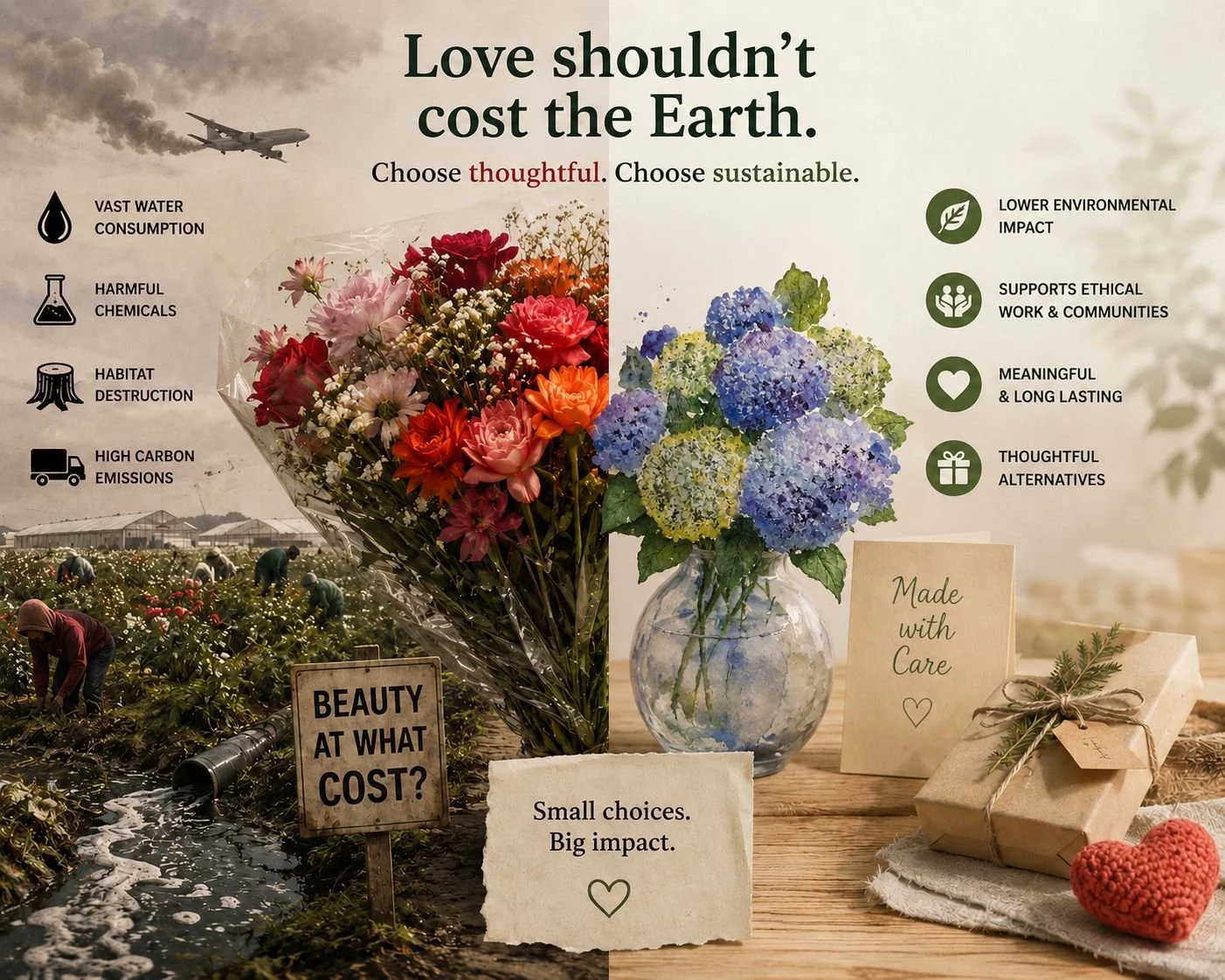
Buying flowers may not be as innocent a gesture as it appears.
One of the most significant environmental concerns is water usage. Flower farming requires enormous quantities of water. In regions where flowers are grown for export, often in parts of Africa and South America, this water is frequently diverted from local communities and ecosystems. Lakes and rivers can be depleted to sustain farms that primarily serve foreign markets, leaving nearby populations with reduced access to clean water. In areas already vulnerable to drought, this creates a serious imbalance between economic activity and basic human needs.
Beyond water consumption, the local environmental impact of flower farming can be severe. Many farms rely heavily on pesticides, herbicides, and chemical fertilizers to maintain the perfect appearance consumers expect. These chemicals can seep into the soil and nearby water sources, harming wildlife and contaminating drinking water. Over time, this degrades the land, reduces biodiversity, and disrupts fragile ecosystems. Workers and residents living near these farms are often exposed to these substances, increasing health risks.
Another serious consequence of large-scale flower farming is deforestation and the destruction of natural habitats. In order to create space for vast flower plantations, forests, wetlands, and grasslands are sometimes cleared. In regions rich in wildlife, this disruption can have cascading effects on entire ecosystems. Transportation is another major factor. A large percentage of flowers sold in Europe and other wealthy regions are imported from thousands of kilometers away. To keep them fresh, flowers are refrigerated and transported quickly, often by air freight, adding significantly to the overall carbon footprint. But even when flowers are locally grown, heated greenhouses can have higher emissions that imported flowers.
In addition to environmental issues, the flower industry has been criticized for unfair labor practices in many countries, including in Europe. Workers, often migrants from poor countries, are paid very low wages and work long hours under demanding physical conditions. They have limited job security and insufficient protection from exposure to harmful chemicals. Women make up a large portion of the workforce in this industry, and reports have highlighted instances of unequal treatment, sexual harassment, and lack of labor rights.
Giving flowers is not always the most thoughtful choice it appears to be.The flower industry, especially the export-driven, industrial flower farming, contributes to climate change and health risks and raises ethical questions about its labor conditions. Instead, we can choose alternatives that are more meaningful and sustainable. Options such as potted plants that last longer and are locally grown, other locally made gifts or handmade items can carry deeper personal value while reducing environmental and social impact. By rethinking the long-standing tradition of giting flowers, we not only express care for the recipient but also for the wider world, making our gestures of kindness more lasting in every sense.
Sources
The Guardian, The true cost of Ecuador’s perfect roses: how the global flower trade poisons workers, 20 February 2026.
The Guardian, ‘There’s a dark side to floristry’: are pesticides making workers seriously ill –or worse?, 11 January 2026.
European Commission, Directorate-General for Environment, Actions are needed on the water-hungry, pesticide-hungry, invasive-species spreading ornamental plant trade, 3 July 2025.
B. Okinda, A Case for Sustainable Water Use in the Floriculture Industry, Thrusd, 19 February 2025
E. Waweru, The Dark Side of the Flower Sector: the growing exploitation of women in Kenya, Ethical Trading Initiative, 10 november 2022.
NL Times. Dutch Flower Growers Massively Using Banned Pesticides, 14 February 2026
K. Siegmann, Migrant Work and the Future of Food Cultivation in the Netherlands, Devissues Erasmus University, October 2024.
BBC News, Toiling on a Kenyan Flower Farm to Send Fresh Roses to Europe, 25 September 2024.
R. Sherlock, The Truth Behind Your Valentine’s Day Flowers, NPR All Things Considered, 14 February 2025.
Journalismfund, An Unrosy Affair: Europe’s Flower Trade Fuels Climate Crisis in Kenya, 1 February 2024.